If you manufacture hydraulic hoses, industrial rubber hoses, or other flexible rubber tubing, you need a reliable way to display brand identity, product specifications, standard codes, and batch information on the hose outer surface — permanently.
Vulcanizable transfer tape is designed for exactly this purpose. During the vulcanization process, it uses heat and pressure to transfer printed artwork onto the hose outer rubber cover, making the marking an integral part of the hose itself — not a label stuck on afterward.
This guide explains what vulcanizable transfer tape is, how it works, how it differs from adhesive labels, where it is used, and what rubber hose manufacturers should consider when selecting the right product for their layline printing and branding needs.
What Does “Vulcanizable Transfer Tape” Mean?

Vulcanizable transfer tape vs adhesive label comparison
Vulcanizable transfer tape is a specialized marking material used during the rubber vulcanization process. It is applied to the uncured hose outer cover before vulcanization. During curing — whether by steam, salt bath, or hot air — the printed ink layer transfers from the tape carrier onto the rubber surface under heat and pressure, bonding with the outer rubber compound.
After vulcanization, the artwork becomes a permanent part of the hose surface. This is what the rubber hose industry calls a layline — the continuous or repeating line of branding and specification text running along the hose.
This product is known by several names across different markets:
- Vulcanizable transfer tape / vulcanisable transfer tape (UK spelling)
- Vulcanizable transfer labels
- Layline transfer tape / layline printing film / layline marking film
- Hose transfer tape
- Vulcanization marking tape
- Vulcanizable branding tape / vulcanizable branding film
Despite the different names, the core product and function are the same: permanent surface marking on rubber hoses achieved during the vulcanization process.
How Does Vulcanizable Transfer Tape Work?
The process follows four main steps:
Step 1: Artwork preparation
The label content is prepared based on the hose manufacturer’s requirements — typically including brand logo, hose series, size (DN or dash size), applicable standards such as SAE J517 or EN 853, working pressure, and date or batch codes.
Step 2: Application to the uncured hose
The vulcanizable transfer tape is applied to the hose outer surface after extrusion but before vulcanization. Application can be manual or automated depending on the production setup.
Step 3: Co-vulcanization with the hose
The hose enters the curing process (steam vulcanization, salt bath, hot air, etc.). Under heat and pressure, the ink layer transfers from the tape carrier onto the outer rubber surface and bonds with it.
Step 4: Carrier removal
After vulcanization, the tape carrier separates or is consumed during the process. Only the printed artwork remains on the hose surface — flush with the rubber, with no raised edges or separate film layer.
The result is a layline marking that is part of the hose, not an add-on.
How Is Vulcanizable Transfer Tape Different from a Sticker Label?
This is the most common question from hose manufacturers encountering this product for the first time. The fundamental difference lies in when it is applied and how it bonds to the hose.
| Comparison | Vulcanizable Transfer Tape | Adhesive Sticker Label |
|---|---|---|
| When applied | Before vulcanization | After the hose is finished |
| Bond type | Integrated with outer rubber during curing | Surface adhesion via adhesive layer |
| Durability | Same as the hose outer cover | Susceptible to oil, heat, and abrasion |
| Surface finish | Flush — no raised edges | Raised edges that may peel |
| Typical use | Permanent layline: brand, specs, standards | Logistics labels, temporary markings |
In short: vulcanizable transfer tape makes the marking part of the hose. An adhesive sticker sits on top of the surface.
Where Is Vulcanizable Transfer Tape Used?
Vulcanizable transfer tape is used across a wide range of rubber hose products:
- Hydraulic hoses — SAE 100R1/R2, EN 853 1SN/2SN, EN 856 4SP/4SH, and similar
- Industrial hoses — air, water, chemical, suction and discharge hoses
- Automotive hoses — radiator, fuel, AC, and brake hoses
- Specialty hoses — steam, food-grade, LPG, marine, and mining hoses
Different hose types use different outer rubber compounds (such as CR, EPDM, NBR, SBR, CPE, or CSM) and different vulcanization methods. This means the transfer tape must be matched to the specific outer rubber and curing conditions — one tape does not fit all hoses.
How to Choose the Right Vulcanizable Transfer Tape
Before requesting samples or quotations from a transfer tape supplier, hose manufacturers should consider these key factors:
1. Outer rubber compound type
Different rubber systems (CR, EPDM, NBR, etc.) have different polarity, surface characteristics, and curing chemistry. The tape must be compatible with the target outer rubber.
2. Vulcanization method and conditions
Steam curing, salt bath curing, and hot air curing differ in temperature, time, and pressure. The tape should be validated under the actual curing conditions used in production.
3. Color requirements
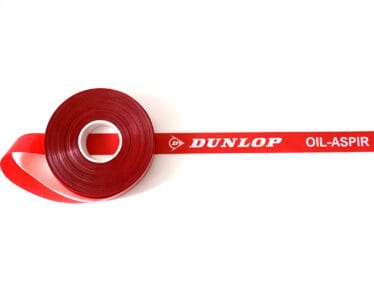
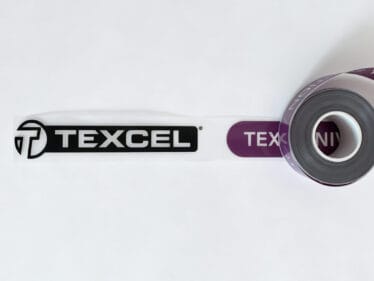
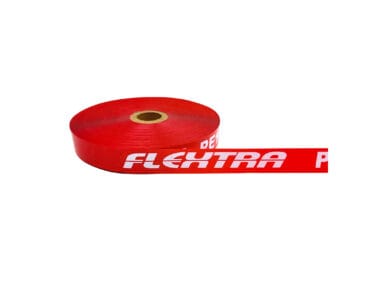
Common colors include white, yellow, red, blue, and green. Color appearance may vary between black outer rubber and colored outer rubber — always confirm with physical samples rather than screen colors.
4. Artwork content and font design
Brand logos, product codes, standard references, pressure values, and batch codes all need to be legible. Very thin fonts or densely packed text may affect transfer clarity, especially on fabric-textured or rough hose surfaces.
5. Hose size range
Tape width and repeat length should match the hose diameter. Small-bore hoses have tighter curvature, which demands better tape application flatness.
6. Volume and delivery schedule
Annual usage volume and order frequency may affect customization options, lead times, and pricing structure.
Explore our full product range and customization capabilities on the vulcanizable transfer tape product page.
What Information Goes on a Hose Layline?

Vulcanizable transfer tape color options for hose manufacturers
Depending on the hose type and target market, a layline produced with vulcanizable transfer tape typically includes:
- Manufacturer brand name or logo
- Hose product series or model number
- Nominal bore (DN) or dash size
- Applicable standards — such as SAE, EN, ISO, DIN, or customer specifications
- Working pressure (WP) — in BAR or PSI
- Production date or batch code
- Certification marks (e.g., MSHA, DNV — where authorized)
- Flow direction arrow (for certain hose types)
Important: Standard codes, pressure values, and certification marks printed on the layline must match the hose’s actual technical documentation and test results. The tape supplier produces according to the approved artwork — the accuracy of technical content is the hose manufacturer’s responsibility.
Quick Comparison with Other Layline Printing Methods
Vulcanizable transfer tape is not the only way to mark a hose layline. Here is a brief comparison with other common methods:
| Method | Application Stage | Durability | Color Options | Changeover | Equipment Cost |
|---|---|---|---|---|---|
| Vulcanizable transfer tape | Before vulcanization | Equal to outer rubber | Multiple colors | Flexible | Lower |
| Ink jet printing | After vulcanization | Depends on ink and surface | Usually single color | Flexible | Medium |
| Embossing / debossing | During vulcanization | Permanent (recessed) | No color | Mold change required | Higher |
| Laser marking | After vulcanization | Permanent | No color / single tone | Flexible | Higher |
Each method has its advantages. The right choice depends on product positioning, customer requirements, production conditions, and budget.
How to Get Started with Sampling
For first-time customers, we recommend the following sampling process:
- Provide hose information — hose type, outer rubber compound, vulcanization method, typical curing temperature and time
- Provide artwork content — logo (vector file preferred), text content, color requirements (Pantone reference preferred)
- Send hose samples — actual hose samples are needed for compatibility testing
- Confirm tape specifications — width, repeat length, color
- Sample production and curing test — test transfer results under actual vulcanization conditions
- Evaluate and confirm — check clarity, color accuracy, adhesion, and appearance after bending
The purpose of sampling is to verify tape compatibility with your specific outer rubber and curing process. Skipping this step and going directly to volume production is not recommended.
Summary
Vulcanizable transfer tape is a purpose-built marking material for the rubber hose manufacturing process. It transfers brand identity, specifications, and standard information onto the hose outer cover during vulcanization, making the layline a permanent part of the hose.
Choosing the right tape requires consideration of outer rubber type, vulcanization conditions, color, artwork design, and hose dimensions — and validation through actual sample testing.
FLLabels is a factory specializing in vulcanizable transfer tape and labels for rubber hose manufacturers worldwide. We supply customized layline printing solutions for hydraulic hoses, industrial hoses, automotive hoses, and specialty hoses across multiple rubber compounds and curing processes.
Evaluating your hose layline marking options or ready to start sampling? Contact us with your hose samples and artwork requirements for a customized solution and free sample support.
FAQ
What is vulcanizable transfer tape?
Vulcanizable transfer tape is a marking material used during rubber hose vulcanization. It transfers printed artwork — including brand logos, product specifications, standard codes, and batch information — onto the hose outer rubber surface through heat and pressure, making the marking a permanent part of the hose.
How is vulcanizable transfer tape different from an adhesive label?
Vulcanizable transfer tape is applied before vulcanization and bonds with the outer rubber during curing, becoming part of the hose surface. Adhesive labels are stuck onto the finished hose surface and are more susceptible to peeling from oil, heat, or abrasion.
What types of hoses can use vulcanizable transfer tape?
It can be used on hydraulic hoses, industrial hoses, automotive hoses, and specialty hoses. However, different outer rubber compounds and vulcanization conditions require matched tape formulations — compatibility should be verified through sample testing before volume production.
How do I start a sampling project for vulcanizable transfer tape?
Provide your hose type, outer rubber compound, vulcanization method, curing conditions, artwork files (vector logo and text), and color requirements. Send actual hose samples so the supplier can test tape compatibility under your real production conditions.