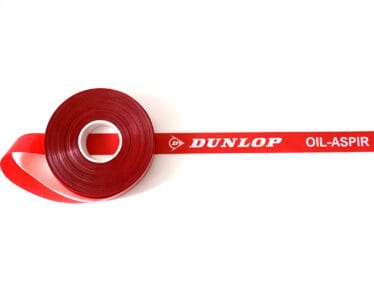
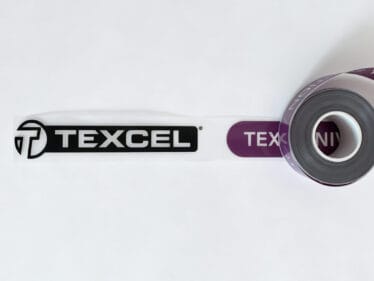
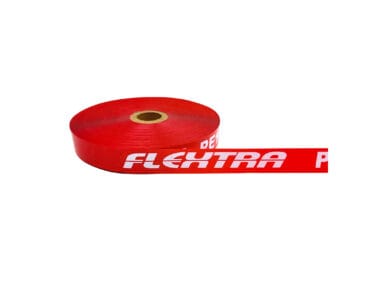
Vulcanizable labels are the only permanent solution for marking EPDM rubber hoses that require extreme durability. For hose manufacturers, the layline is more than just a branding tool; it is a critical requirement for regulatory compliance and safety traceability. However, when using standard inks on EPDM, many producers encounter persistent delamination issues.
Why do traditional methods fail, and how can a high-quality vulcanizable label provide a permanent, chemically bonded solution? This article analyzes the challenges of EPDM marking and provides 3 industrial-grade solutions to ensure your vulcanizable label never peels.
1. EPDM Properties: The Barrier to Label Adhesion
EPDM is prized for its exceptional weather and ozone resistance, often meeting rigorous standards like those set by SAE International. However, these same properties make it incredibly difficult for any vulcanizable label or ink to adhere without specific chemistry.
Low Surface Energy & Chemical Inertness
EPDM possesses low surface energy, which prevents standard inks from “wetting” the surface. Without a specialized vulcanizable label that can form covalent bonds, the marking will simply sit on the surface and eventually peel off during the curing process.
2. How a Vulcanizable Label Integrates with Rubber
To solve the delamination problem, manufacturers use a vulcanizable label. Unlike printing, this is a process of chemical integration. For more on material compatibility, see our Rubber Material Selection Guide.

Technical Principle: Co-vulcanization
3. Root Cause Analysis of Label Failure
Even with a professional vulcanizable label, improper parameters can lead to failure. We identify three common modes:
1. Edge Peeling
Root Cause: Mismatch between the vulcanizable label cure rate and the EPDM substrate → rightarrow Internal stress → rightarrow Edge delamination.
2. Bleeding or Smudging
Root Cause: Oil migration on the surface → rightarrow Interference with the vulcanizable label cross-linking → rightarrow Blurred edges.
4. 3 Solutions for Optimizing Vulcanizable Label Adhesion
To ensure your vulcanizable label achieves a zero-defect finish, we recommend these optimizations. For custom designs, explore our Custom Layline Printing Services.

Solution 1: Formulation Synchronization
The ink in your vulcanizable label must be engineered to match the specific EPDM compound (sulfur vs. peroxide) to ensure synchronous cross-linking.
Solution 2: Precise TTP Management
Successful application of a vulcanizable label depends on Time, Temperature, and Pressure to trigger the chemical reaction.
Solution 3: Strategic Surface Pre-treatment
Cleaning the surface before applying the vulcanizable label increases surface energy, facilitating a stronger covalent bond.
5. Selecting the Right Vulcanizable Label Partner
When choosing a supplier for your vulcanizable label needs, prioritize these indicators:
- Customization: Can they engineer the vulcanizable label based on your specific compound?
- Consistency: Chemical uniformity across large batches.
- Compliance: Full RoHS and REACH certification.
🚀 Test Our Vulcanizable rubber hose Label Quality
Not sure if your EPDM compound is compatible? We provide Free Sample Kits for our vulcanizable labels tailored to your formulation.
Frequently Asked Questions (FAQ)
Q1: Is a Vulcanizable Label more expensive than inkjet printing?
A: While the initial cost per vulcanizable label is higher, the TCO is lower due to reduced scrap rates and higher product quality.
Q2: Can a Vulcanizable Label be used on NBR or SBR?
A: Yes, but the chemistry of the vulcanizable label must be adjusted to match the specific curing system of NBR or SBR.
Upgrade to a Permanent Vulcanizable Label
Stop struggling with peeling markings. By implementing a professional vulcanizable label solution, you ensure a permanent bond and professional branding.
Need a Vulcanizable Label that actually sticks? Contact our experts today.