☰ Table of Contents
If you manufacture rubber hoses, you probably know that the layline markings on the hose outer surface — brand logo, model number, standard codes, working pressure — are applied during the vulcanization stage.
But do you truly understand how this process works? What roles do temperature, time, and pressure each play? How do different curing methods affect the transfer result? And how is this heat transfer for rubber hose fundamentally different from heat transfer in the garment or packaging industry?
Understanding these principles helps you not only choose the right marking solution, but also quickly diagnose production problems — why are characters missing? Why is the color wrong? Why did this batch peel?
This guide explains the working mechanism of heat transfer for rubber hose in straightforward terms, helping hose manufacturers build a solid understanding of this process.
What Is “Heat Transfer” on a Rubber Hose?
In the rubber hose industry, “heat transfer” specifically refers to the process of transferring pre-printed artwork from a tape or label onto the hose outer rubber surface during vulcanization, using the heat and pressure of the curing process itself.
The defining characteristics of this process are:
- It happens during vulcanization — not before, not after, but simultaneously with hose curing
- The marking bonds with the outer rubber — it becomes part of the hose surface, not something sitting on top
- It uses the curing heat and pressure — no separate heating equipment is needed
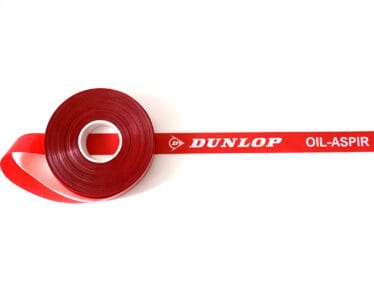
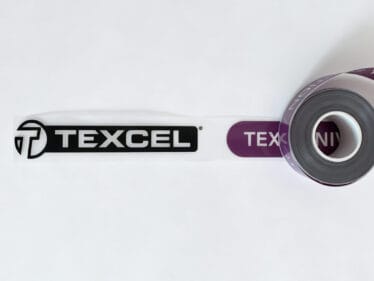
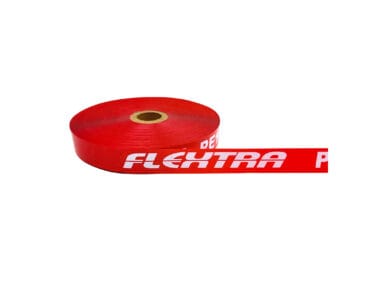
This is why the industry calls these products vulcanization marking tape or rubber transfer label — emphasizing their deep integration with the vulcanization process.
How It Differs from Other Heat Transfer Methods
“Heat transfer” is a term used across many industries, but heat transfer for rubber hose is fundamentally different from heat transfer in garments or packaging:
| Dimension | Rubber Hose Vulcanization Transfer | Garment Heat Transfer | Packaging Heat Transfer |
|---|---|---|---|
| Substrate | Uncured rubber | Fabric | Plastic film / paper |
| Temperature | 150–200°C (varies by curing method) | Typically 130–180°C | Typically 80–150°C |
| Pressure source | Vulcanization equipment | Heat press | Print rollers |
| Bond mechanism | Chemical/physical bond with crosslinking rubber | Hot-melt adhesive | Hot-melt adhesive or coating |
| Duration | Minutes to tens of minutes | Seconds to tens of seconds | Typically seconds |
| Durability | Equal to hose outer cover | Depends on adhesive | Depends on adhesive |
The key difference: In rubber hose heat transfer, the ink layer bonds with the outer rubber during the crosslinking reaction. This produces marking durability equal to the hose outer cover itself — something other heat transfer methods cannot achieve.
How It Works: The Four-Step Process

Step 1: Artwork preparation
Brand logo, product model, standard codes (such as SAE J517, EN 853), working pressure, and batch information are printed onto a tape carrier using specially formulated high-temperature inks — not ordinary printing inks — designed to remain stable at vulcanization temperatures and bond with rubber surfaces.
Step 2: Application to the uncured hose
After the hose outer rubber is extruded but before vulcanization, the tape is applied to the hose outer surface. At this stage, the uncured rubber has a degree of tack and surface activity.
Application quality directly affects the transfer result — the tape must be flat, bubble-free, and wrinkle-free, with full contact against the outer rubber.
Step 3: Co-vulcanization — the core step
This is where the heat transfer for rubber hose actually happens.
When the hose enters the curing equipment, under the combined effect of temperature and pressure:
- The outer rubber begins crosslinking — rubber molecular chains form a three-dimensional network
- The ink layer on the tape softens and penetrates into the crosslinking outer rubber surface under heat
- The ink layer forms a chemical and/or physical bond with the outer rubber during crosslinking
- The tape carrier completes its function during the curing process
Step 4: Carrier removal — marking revealed
After vulcanization, the tape carrier separates naturally or is removed in subsequent steps. Only the clear artwork remains on the hose surface — flush, smooth, and fully integrated with the outer rubber.
Temperature, Time and Pressure: How Each Affects Transfer
Understanding these three parameters is the foundation for diagnosing transfer problems.
Temperature — the engine that drives transfer
Temperature is the core trigger for transfer. Its roles include:
- Making the ink layer soften so it can flow and penetrate
- Driving the outer rubber’s crosslinking reaction
- Promoting bond formation between ink and outer rubber
Too low: Ink cannot soften and penetrate sufficiently → incomplete transfer or poor adhesion
Too high: May affect ink color stability → darkening or discoloration
Time — the guarantee of complete bonding
Vulcanization time determines whether the ink-to-rubber bond has enough time to fully develop.
Too short: Bond not fully formed → marking may look complete but peels under bending or abrasion
Too long: Usually minimal impact on marking, but may cause over-cure of the hose body
Pressure — the foundation of contact
Pressure ensures the tape and hose outer rubber maintain tight contact throughout vulcanization.
Too low: Localized contact gaps → partial missing areas
Uneven: Inconsistent clarity — some areas sharp, others blurred
Important: Curing parameter adjustments should always prioritize hose body quality. Do not arbitrarily increase temperature, extend time, or raise pressure solely to improve marking — these changes may affect hose dimensions, appearance, and physical properties.
Common Curing Methods and Transfer Compatibility
Different hose manufacturers use different vulcanization methods. Each method has distinct temperature, pressure, and heat transfer characteristics that affect rubber transfer label performance.
Steam vulcanization
Characteristics: Most common method. Temperature typically 150–170°C. Steam provides relatively uniform temperature and pressure distribution. Curing time ranges from minutes to tens of minutes.
Transfer compatibility: Steam curing offers the most uniform conditions and is the most mature platform for vulcanization marking tape. Most standard tape formulations are developed and validated under steam curing conditions.
Salt bath vulcanization (LCM)
Characteristics: Higher temperature (can exceed 200°C). Faster curing speed. Higher heat transfer efficiency. Commonly used on continuous vulcanization lines.
Transfer compatibility: The higher temperature and faster speed place greater demands on tape heat resistance. Standard tapes may show color drift or unstable transfer under salt bath conditions. High-temperature specialty tapes are usually required.
Hot air vulcanization
Characteristics: Heating via circulating hot air. Temperature distribution may be less uniform than steam. Pressure comes primarily from the hose structure itself. Warm-up may be slower.
Transfer compatibility: Pressure conditions differ from steam curing, so tape-to-rubber contact behavior may vary. Separate validation under actual hot air conditions is recommended.
| Curing Method | Typical Temperature | Curing Speed | Tape Requirement |
|---|---|---|---|
| Steam | 150–170°C | Medium | Standard tape usually suitable |
| Salt bath (LCM) | 180–220°C | Fast | High-temperature specialty type required |
| Hot air | 150–200°C | Slower | Separate contact and pressure validation needed |
Other Factors That Affect Transfer Quality
Beyond temperature, time, and pressure, the following factors also influence heat transfer for rubber hose results:
- Outer rubber compound type — different rubber systems have different polarity and surface energy, affecting ink bond strength
- Outer rubber surface condition — oil, bloom, or dust can block effective contact
- Tape application quality — bubbles, wrinkles, or edge lifting cause localized transfer failure
- Artwork design — very fine fonts or overcrowded layouts increase transfer difficulty
- Tape storage conditions — high temperature or humidity may degrade tape performance
Want a detailed troubleshooting guide for incomplete transfer? See our article: Rubber Hose Transfer Label Not Printing Fully?
Summary
Heat transfer for rubber hose is not simply “heating and sticking.” It is a process deeply integrated with vulcanization — using curing temperature and pressure to bond the tape ink layer with the crosslinking outer rubber, producing permanent markings with durability equal to the hose outer cover.
Understanding the roles of temperature, time, and pressure, and knowing the compatibility requirements of different curing methods, is the foundation for choosing the right marking solution and quickly diagnosing production issues.
FLLabels has been serving rubber hose manufacturers worldwide for over a decade, with deep expertise in how different vulcanization processes affect marking performance. We provide matched vulcanization marking tape solutions for steam, salt bath, and hot air curing — covering CR, EPDM, NBR, and other outer rubber systems.
Want to know which tape solution fits your curing process? Contact us with your vulcanization method and outer rubber type for free compatibility advice and sample support.
FAQ
How is heat transfer for rubber hose different from garment heat transfer?
The core difference is the bonding mechanism. Rubber hose heat transfer happens during vulcanization, where the ink layer forms a chemical/physical bond with the crosslinking rubber — producing durability equal to the hose cover. Garment heat transfer uses hot-melt adhesive bonding as a separate post-processing step, with durability dependent on the adhesive.
Which factor affects heat transfer for rubber hose the most — temperature, time, or pressure?
All three are essential, but temperature is the core driver. Insufficient temperature prevents proper ink softening and penetration. Insufficient time prevents complete bond formation. Insufficient pressure prevents adequate contact. Any parameter adjustment should prioritize hose body quality.
Can standard vulcanization marking tape be used with salt bath curing?
Usually not recommended. Salt bath curing temperatures can exceed 200°C, and standard tapes may show color drift or unstable transfer. High-temperature specialty vulcanization marking tape is typically required, validated under actual salt bath conditions.
If the transfer result is poor, is it always the tape’s fault?
Not necessarily. Transfer quality is influenced by tape, outer rubber compound, surface condition, application quality, vulcanization parameters, and artwork design. A systematic investigation across all these factors is recommended rather than attributing the issue solely to the tape.