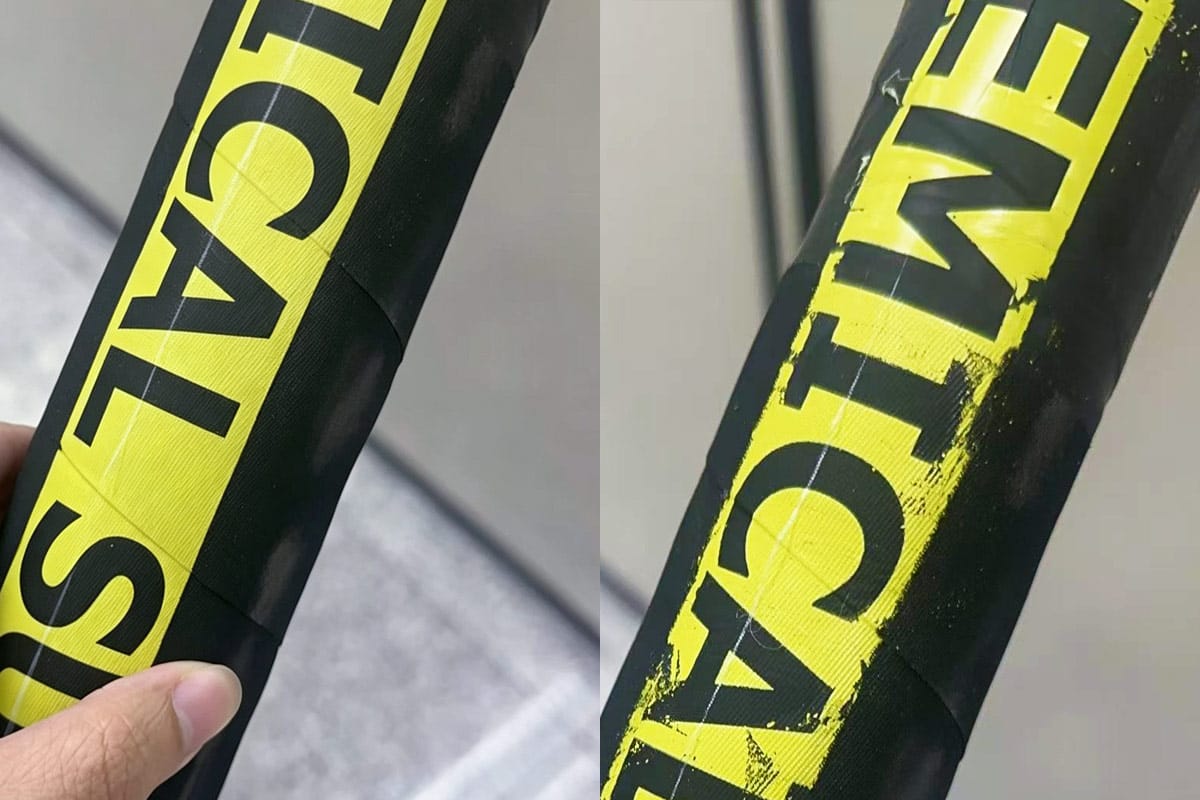
In the production of hydraulic hoses, industrial rubber hoses, and other flexible rubber tubing, vulcanized transfer labels are widely used to display layline information — including brand names, product series, size, applicable standards such as SAE J517 or EN 853, working pressure, and batch codes.
But during trial runs or volume production, many hose manufacturers encounter a common problem: the rubber hose transfer label has not fully printed onto the outer cover after vulcanization — showing missing characters, broken lines, partial logos, or blank sections.
This issue cannot be attributed to a single cause by visual inspection alone. The final result is typically influenced by a combination of factors including surface condition, label application quality, vulcanization parameters, label storage, and artwork design.
This article focuses on one specific defect: incomplete transfer of vulcanized hose labels. It provides a structured diagnostic framework for hose manufacturers to use in internal quality analysis, sample evaluation, and technical discussions with label suppliers.
For label peeling or adhesion issues after curing, see our related guide: Rubber Hose Transfer Label Peeling Off? Adhesion Troubleshooting Guide.
What Is “Incomplete Transfer” on a Rubber Hose Transfer Label?
Before making any adjustments, it is important to define the problem accurately and rule out other issues that may look similar.
“Incomplete transfer” means that the label artwork — text, numbers, lines, or graphics — has not been fully deposited onto the hose outer cover surface.
Common signs of incomplete transfer:
- Letters, digits, or punctuation marks partially missing
- Fine lines, borders, or logo outlines broken or interrupted
- Small blank spots or voids within the printed area
- One side or section noticeably lighter than the rest
- Incomplete printing at the label edges
- Inconsistent quality along the same hose coil
The following are NOT necessarily “incomplete transfer”:
- Artwork is fully present but color appears faint
- Artwork is complete but wears off after abrasion
- Artwork is complete but font is too small to read easily
- Artwork is shifted or misaligned, but all text is present
Accurately defining the problem helps narrow down the investigation.
How Does a Rubber Hose Transfer Label Achieve Complete Printing?
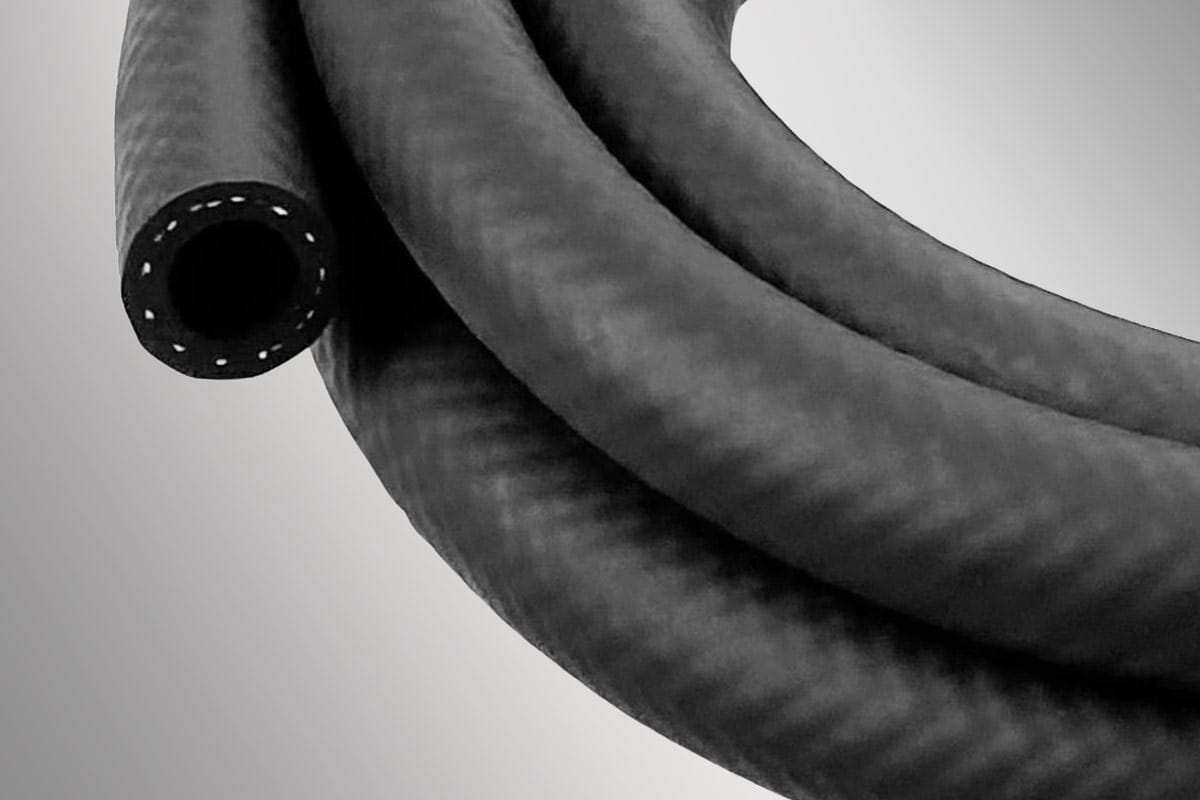
For a rubber hose transfer label to produce a fully legible layline, five conditions generally need to be met simultaneously:
- The hose outer rubber surface is suitable for transfer
- The label maintains full, even contact with the hose surface before and during vulcanization
- Vulcanization temperature, time, and pressure are within a controlled range
- The label artwork design is compatible with the hose surface characteristics
- The label has been properly stored and applied without contamination, moisture, wrinkling, or misalignment
If any of these conditions is not met, incomplete transfer may occur.
5 Common Causes of Incomplete Rubber Hose Transfer Label Printing — And How to Fix Them
Step 1: Is the Hose Outer Rubber Surface Abnormal?
The outer rubber surface is the foundation of transfer quality. If the surface has oil residue, cooling fluid traces, dust, release agents, or other contaminants, the label ink layer may not make effective contact with the rubber.
Additionally, certain rubber compound components may migrate to the surface under specific conditions — a phenomenon sometimes referred to as rubber bloom — which can also cause unstable transfer results.
Quick diagnosis:
- Is the defect concentrated on one side of the hose or in a specific batch?
- Can you see oil spots, water marks, whitening, or uneven gloss on the surface?
- Does the same label work well on a freshly extruded, clean hose sample?
- Has the rubber compound, carbon black, plasticizer, or curing system been changed recently?
Recommended actions:
- Keep the hose surface clean, dry, and free of contaminants before labeling
- Check cooling, conveying, and coiling stations for potential contamination sources
- If the outer rubber formulation has changed, re-confirm label compatibility
- Do not use silicone-based or solvent-based surface treatments without prior validation
The label supplier can assist with compatibility analysis, but outer rubber formulation and hose performance decisions remain the responsibility of the hose manufacturer’s engineering and quality teams.
Step 2: Is the Label Applied Flat? Is Contact Sufficient?
A rubber hose transfer label cannot simply be placed loosely on the hose surface. If the label has air bubbles, wrinkles, edge lifting, or bridging after application, the artwork in those areas may not contact the outer rubber during vulcanization.
Typical defects include: edge characters missing, logo corners absent, patch-like blank areas, or incomplete artwork on the curved side.
Higher-risk hose types: small-bore hoses, fabric-textured surfaces, hoses labeled while bent, and hoses requiring wide labels.
Key inspection points:
| Inspection Item | Key Observation Points |
|---|---|
| Label Flatness | Air bubbles, wrinkles, edge lifting, or localized bridging |
| Nylon Wrapping Cloth | Worn or damaged — needs to be checked and replaced if necessary |
| Label Tension | Excessive stretching causing label distortion or retraction |
| Label Dimensions | Width and length appropriate for hose curvature |
| Hose Tracking | Vibration, wandering, or twisting at the labeling station |
Key rule: If the defect consistently appears in the same position, prioritize checking labeling tooling and contact pressure distribution rather than the label material.
Step 3: Are Vulcanization Conditions Fluctuating?
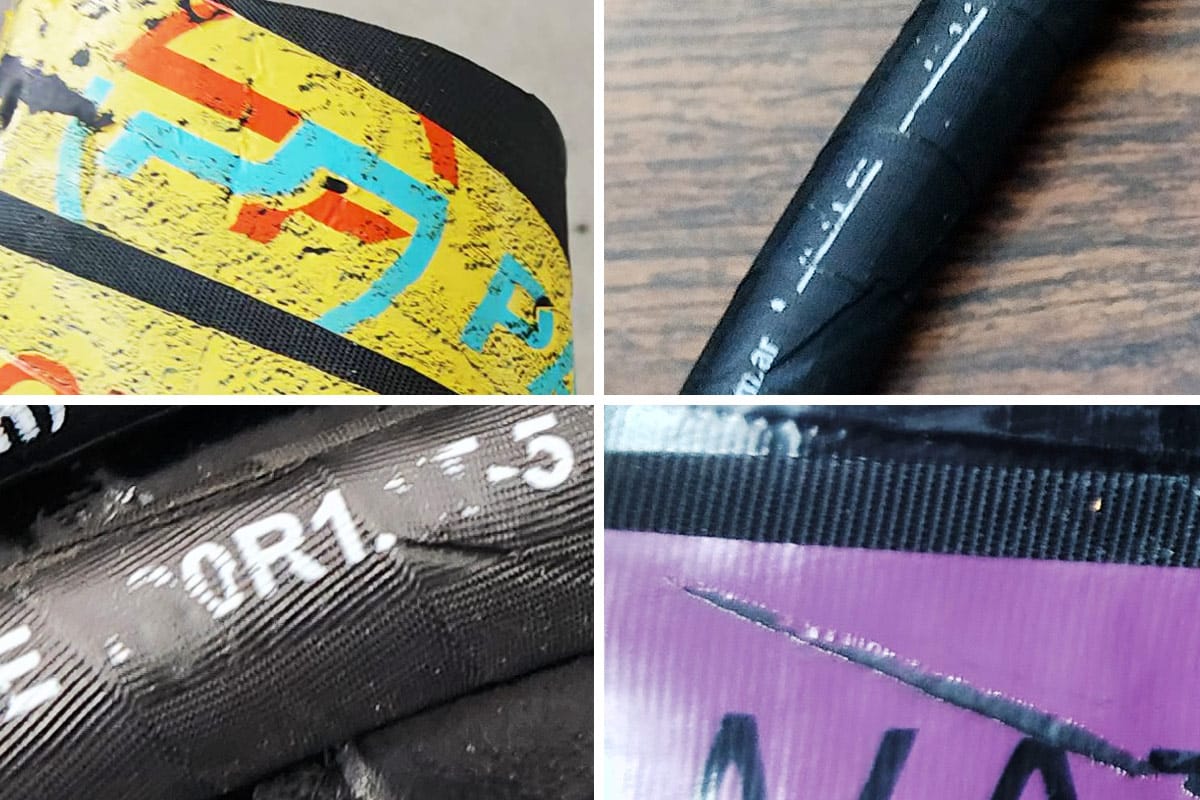
Vulcanization temperature, time, pressure, and heat transfer all affect the rubber hose transfer label outcome.
However: do not arbitrarily increase temperature or extend curing time solely to improve label transfer. These changes may affect hose appearance, dimensions, and physical properties.
Common fluctuation scenarios:
- Equipment warm-up phase too long or steam pressure unstable
- Production line speed changed
- Insufficient stabilization time after startup, shutdown, or line changeover
- Different hose sizes using the same vulcanization parameters
Recommended investigation:
- Compare vulcanization records (temperature, time, pressure, line speed) between normal and defective batches
- Check if defects concentrate during startup, coil changes, or equipment adjustments
- Conduct small-scale trials changing only one variable at a time
Does incomplete transfer mean the hose is under-cured? Not necessarily. Label appearance should not be used as the sole indicator of hose curing quality. Hose vulcanization should be evaluated according to internal process specifications, product standards such as ISO 8330, and relevant test results.
Step 4: Is the Label Itself in Proper Condition?
Even when the label design and hose process have been confirmed, the label’s condition during transport, storage, and on-site handling may affect transfer performance.
Risk factors to watch for:
- Labels stored long-term in high temperature, high humidity, or direct sunlight
- Labels near oils, solvents, or volatile chemicals
- Label surfaces affected by dust, perspiration, oil, or mechanical scratches
- Label rolls deformed by pressure during transport
- Labels used beyond recommended storage period without re-confirmation
- Different label versions mixed together
Recommended management practices:
- Store by batch, version, and customer project
- Follow supplier-recommended storage temperature and humidity
- Apply first-in, first-out (FIFO) principles
- Perform first-piece confirmation when changing batches or versions
- Maintain traceability records linking label batches to hose production batches
Step 5: Is the Artwork Too Fine for the Hose Surface?
Sometimes the issue is not the process but the artwork design itself.
Excessively thin font strokes, tightly spaced characters, overly detailed logos, or densely packed layouts can all increase the risk of incomplete transfer — especially on hoses with fabric impression, matte texture, or rough surfaces.
Design elements requiring careful evaluation: very thin typefaces, small character height, complex logo outlines, closely spaced text, small QR codes, large solid-fill areas, and overly wide artwork on small-bore hoses.
Optimization suggestions:
- Increase font stroke width and character spacing
- Simplify non-essential logo details
- Prioritize essential layline information: brand, series, standard, size, pressure, batch code
- Conduct separate sample confirmations for smooth, fabric-textured, and matte surfaces
- Validate on actual hose samples, not just screen displays or paper proofs
Recommended Troubleshooting Sequence
When missing characters, broken lines, or partial blanks are detected, follow this sequence to minimize unnecessary trial and error:
Step 1: Document the defect pattern
Record and photograph: what is missing (text, lines, logo), where (edges, center, leading/trailing), and whether it is sporadic or continuous.
Step 2: Retain four types of samples
- Unlabeled hose
- Labeled but uncured hose
- Cured with normal transfer
- Cured with defective transfer
Also retain the corresponding label batch, rubber compound batch, and production records.
Step 3: Check application quality and surface condition first
Prioritize: surface contamination or bloom, label flatness, air bubbles, wrinkles, and whether defects correlate with a fixed position.
Step 4: Review vulcanization conditions
Compare temperature, time, pressure, line speed, startup/shutdown logs, and equipment maintenance records between normal and abnormal batches.
Step 5: Conduct single-variable trials
Change only one variable per trial:
- Same label + same hose — compare two application methods
- Same label + same process — compare normal vs. abnormal outer rubber
- Same hose + same rubber — compare two vulcanization windows
- Same process — compare original vs. optimized artwork
This avoids the common problem of “many changes were made but it is unclear which one produced the improvement.”
Quick Diagnostic Checklist for Rubber Hose Manufacturers
| Inspection Item | Normal Reference | Risk Indicators |
|---|---|---|
| Hose Surface | Clean, uniform, free of visible oil or contaminants | Oil spots, water marks, dust, slippery feel, bloom |
| Label Application | Flat, no edge lifting, no visible air pockets | Wrinkles, localized bridging, edge lift |
| Pressure Tooling | Even pressure, stable guiding, clean roller surface | Roller wear, uneven pressure, hose wandering |
| Label Condition | Flat, clean, correct version | Moisture absorption, contamination, creases, mixed batches |
| Vulcanization Records | Stable process within internal requirements | Temperature/pressure fluctuations, speed changes, unplanned stops |
| Outer Rubber Batch | Consistent formulation and surface characteristics | Raw material or formulation changes, surface anomalies |
| Artwork Design | Font and line weights suitable for the hose surface | Excessive fine text, thin lines, overcrowded content |
⬇ Download Quick Diagnostic Checklist
Final Thoughts
Verify Compatibility Before Volume Production
For hydraulic hose and industrial rubber hose manufacturers, a rubber hose transfer label should not be confirmed based solely on color, dimensions, and pricing. Compatibility verification on actual hose products is essential.
Re-confirm label compatibility whenever:
- Outer rubber formulation or raw material supplier changes
- Hose surface changes from smooth to fabric-textured or matte
- Vulcanization equipment or key parameters are adjusted
- Label color, font, logo, or artwork area changes
- New small-bore, large-bore, or non-standard hose sizes are added
- Customer adds batch codes, standard markings, or complex graphics
- Product enters a new export market or OEM customer program
FLLabels specializes in providing custom vulcanized transfer labels for rubber hose manufacturers. For incomplete transfer issues, we recommend customers provide:
- Normal and defective hose samples
- Outer rubber type and surface condition description
- Current label samples or vector artwork files
- Vulcanization method and typical process parameters
- Defect occurrence rate and on-site photographs
- Label batch, rubber compound batch, and production line information
Based on this information, we can assist with preliminary analysis of label artwork, compatibility direction, and sample trial approach. Conclusions relating to hose compound formulation, vulcanization state, and product performance should be confirmed by the hose manufacturer’s engineering and quality teams.
Conclusion
Incomplete printing on a rubber hose transfer label does not automatically indicate a defect in the label material. More commonly, the issue results from a mismatch or fluctuation among the label, outer rubber surface, application conditions, and vulcanization parameters.
An effective approach:
- Accurately define the defect location and pattern
- Retain normal and defective samples with batch records
- Prioritize surface condition and label application quality checks
- Review vulcanization process data
- Conduct single-variable trials to isolate the root cause
- Formalize the confirmed solution as a production standard
Through systematic investigation, layline information — brand, specifications, standards, pressure, and batch traceability — can be presented on the hose surface with greater consistency and reliability.
If you are experiencing missing text, broken lines, or incomplete printing on your rubber hose transfer labels, contact FLLabels with your hose samples, defect photos, and process information for label compatibility analysis and sample trial support.
FAQ
Why does my rubber hose transfer label show missing characters?
Missing characters are typically associated with surface contamination, uneven label application, insufficient contact pressure, vulcanization fluctuations, surface bloom, or artwork with excessively fine lines. Compare normal and defective samples side by side rather than drawing conclusions from a single sample.
Does incomplete rubber hose transfer label printing mean the hose is under-cured?
Not necessarily. Incomplete transfer may be related to vulcanization conditions, but label appearance alone should not be used to determine whether the hose body is adequately cured. Hose curing quality should be evaluated according to process specifications, product standards, and relevant test results.
The rubber hose transfer label always fails at the edges — what should I check first?
If the defect consistently occurs at the label edges, leading edge, or trailing edge, prioritize checking whether the label has edge lift, whether the winding tension of the nylon wrapping cloth is adequate, whether the nylon cloth is worn and needs replacement, and whether label dimensions are appropriate for the hose curvature.
Why does the same rubber hose transfer label work on one hose but not another?
Different hoses may have different outer rubber formulations, surface textures, vulcanization conditions, and production speeds. Even with identical labels, transfer results may vary. Separate compatibility verification for each hose series is recommended.
How can I prevent small text on rubber hose transfer labels from printing incompletely?
Increase character height, stroke width, and character spacing. Reduce overly complex details and validate the design on actual hose samples. For fabric-textured or rough surfaces, avoid very fine artwork elements.