☰ Table of Contents
When rubber hose manufacturers need to print brand logos, product models, standard codes, and working pressure on the hose outer surface, the most common choice comes down to:
Vulcanizable transfer labels or ink jet printing?
Both methods are widely used and both have proven track records. But their working principles, application stages, durability, color capabilities, and cost structures are fundamentally different. Choosing the wrong method can lead to premature marking fade, brand image damage, or unfavorable impressions during OEM customer audits.
This article compares these two hose layline printing methods across eight key dimensions, helping hose manufacturers make the best decision for their product positioning and production conditions.
The Fundamental Difference
Before comparing individual dimensions, understand one core distinction:
- Vulcanizable transfer labels are applied before vulcanization. During vulcanization, heat and pressure transfer the artwork onto the outer rubber, creating an integrated bond with the rubber surface
- Ink jet printing is applied after vulcanization. Ink is sprayed onto the finished hose surface and sits on top of the rubber
This difference drives every other distinction between the two methods.
Dimension 1: Durability
This is the dimension hose manufacturers and end users care about most.
Vulcanizable transfer labels
The ink layer bonds with the outer rubber during crosslinking, becoming part of the hose surface. Durability is comparable to the hose outer cover — resistant to oil, abrasion, and outdoor aging. Under normal conditions, the marking lasts the full hose service life.
Ink jet printing
Ink adheres to the finished hose surface. Durability depends on ink type and ink-to-rubber bond strength. Problems may appear under:
- Continuous abrasion (hose bundling, equipment vibration)
- Oil contact (hydraulic oil, lubricant leaks)
- Outdoor UV exposure
- High-temperature environments
In demanding applications (construction machinery, mining equipment), ink-jet markings may show visible fading within months.
Verdict: For markings that must remain clear throughout the hose lifecycle, vulcanizable transfer labels have a clear advantage.
Dimension 2: Color Capability
Vulcanizable transfer labels
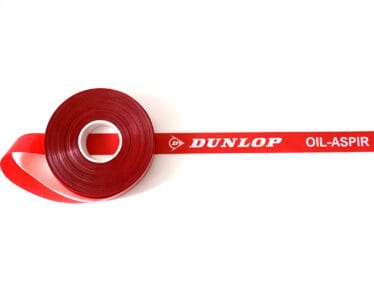
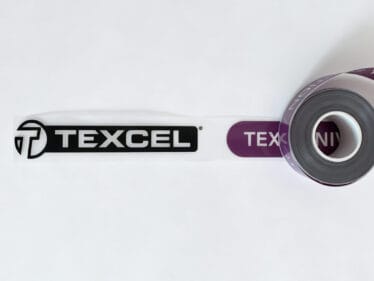
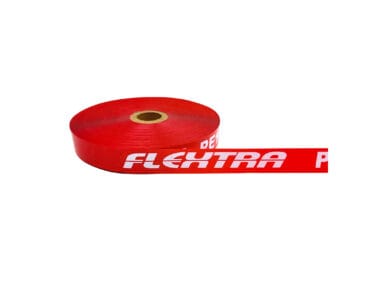
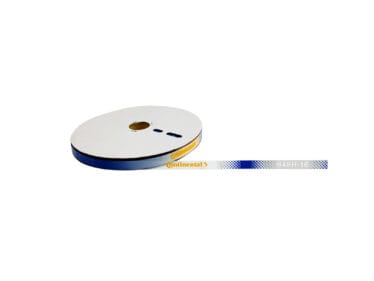
Multiple colors available — white, yellow, red, blue, green, gold, silver. A single tape can include two or more colors. High-contrast colored branding is achievable on black outer rubber.
Ink jet printing
Usually limited to single color — most commonly white or yellow. While some advanced ink jet equipment theoretically supports color, achieving stable, durable multi-color results on rubber hose surfaces remains difficult.
Verdict: For color brand logos or multi-color laylines, vulcanizable transfer labels are the more reliable option.
Dimension 3: Clarity and Brand Visual Impact
Vulcanizable transfer labels
Artwork is embedded flush into the outer rubber surface — no raised edges, no film layer. Font and logo outlines maintain sharp, clean edges when properly designed. Results are particularly strong on smooth outer rubber.
Ink jet printing
Ink dot structure may show visible graininess under close inspection. On fabric-textured or rough surfaces, ink may seep into texture patterns, causing fuzzy character edges. Overall brand visual impact is typically less refined than transfer labels.
Verdict: For products where brand image matters (OEM supply, premium hydraulic hoses), vulcanizable transfer labels deliver superior visual results.
Dimension 4: Equipment Investment

Vulcanizable transfer labels durability vs ink printing after abrasion
Vulcanizable transfer labels
No dedicated printing equipment required. Tape is applied using simple labeling tooling or automated applicators — lower capital investment.
Ink jet printing
Requires purchase of ink jet printing equipment — print heads, control systems, ink supply systems. Investment is medium to high, plus ongoing costs for maintenance, print head replacement, and ink consumables.
Verdict: If the production line does not already have ink jet equipment, vulcanizable transfer labels offer a lower entry barrier.
Dimension 5: Changeover Flexibility and Cost
Vulcanizable transfer labels
Changing brand logos, product models, or standard references simply requires loading a different tape roll. Changeover cost is primarily the new tape production. Well suited for multi-brand, multi-spec, frequent changeover environments.
Ink jet printing
Changing text content (batch numbers, date codes) is extremely flexible — modified directly in the software interface. But changing logos or complex graphics requires template adjustments and is limited by single-color capability.
Verdict: For fixed brand content changeovers (logos, standards, pressure), vulcanizable transfer labels are more efficient. For variable data (batch numbers, date codes), ink jet is more flexible. This is why many manufacturers combine both methods.
Dimension 6: Compatible Hose Types
Vulcanizable transfer labels
Compatible with virtually all rubber hoses that undergo vulcanization — hydraulic, industrial, automotive, and specialty hoses. Requires compatibility verification with the specific outer rubber compound.
Ink jet printing
Compatible with all finished hoses regardless of curing method. However, ink adhesion varies across different outer rubber materials — some compounds (e.g., EPDM, silicone) may have poor ink adhesion.
Verdict: Both methods have broad applicability, but each may encounter compatibility issues on specific outer rubber types.
Dimension 7: Environmental Considerations
Vulcanizable transfer labels
Transfer occurs during vulcanization. Primary waste is spent carrier rolls. No solvent-based inks are sprayed during the marking process — no VOC emissions from the labeling step (depending on tape formulation).
Ink jet printing
Solvent-based inks may release volatile organic compounds (VOCs) during printing and drying. UV-curable inks have lower VOC emissions but require UV curing equipment. Waste ink disposal is an additional environmental consideration.
Verdict: In terms of VOC emissions and waste management, vulcanizable transfer labels generally have an environmental advantage — though specifics depend on tape and ink formulations.
Dimension 8: Variable Data Capability
Vulcanizable transfer labels
Content on each tape roll is fixed at production. Not suitable for batch numbers, serial numbers, date codes, or other information that changes per hose or per coil.
Ink jet printing
Natural strength — can print different batch numbers, date codes, serial numbers, or even QR codes on every individual hose in real time.
Verdict: Variable data is ink jet’s strongest advantage. This is the foundation for the complementary combination of both methods.
Full Comparison Table
| Dimension | Vulcanizable Transfer Labels | Ink Jet Printing |
|---|---|---|
| Durability | Equal to outer rubber | Medium — may fade or wear |
| Color | Multiple colors | Usually single color |
| Clarity / visual impact | High | Average |
| Equipment investment | Lower | Medium to high |
| Fixed content changeover | Flexible — change tape roll | Template adjustment needed |
| Variable data | Not suitable | Natural strength |
| Compatible hoses | Pre-vulcanization hoses | Post-vulcanization hoses |
| Environmental | Generally better | Solvent types have VOC emissions |
Not Either/Or: Combining Both Methods Is the Trend
More and more hose manufacturers recognize that these two methods are not replacements but complements:
- Vulcanizable transfer labels handle fixed content: brand logo, product series, standard codes (e.g., SAE J517, EN 853), working pressure — prioritizing durability and multi-color brand impact
- Ink jet printing handles variable content: batch numbers, production dates, serial numbers, traceability QR codes — prioritizing flexibility and real-time capability
This combination gives every hose both lasting brand identity and flexible traceability data — an approach that is becoming standard among mid-to-high-end hydraulic hose manufacturers and OEM suppliers.
Quick Decision Guide
Answer these questions to quickly identify your direction:
“Does my layline need a color brand logo?”
→ Yes → vulcanizable transfer labels
“Must the marking remain clear for the full hose service life?”
→ Yes → vulcanizable transfer labels
“Do I need to print different batch numbers or QR codes on each hose?”
→ Yes → ink jet printing (or combination)
“Does my line already have ink jet equipment?”
→ No → vulcanizable transfer labels have lower initial investment
“Do I need both lasting brand identity AND variable traceability data?”
→ Yes → combine both methods
Summary
Vulcanizable transfer labels and ink jet printing each have distinct strengths. The right choice depends on your product positioning, brand requirements, production conditions, and customer expectations.
For hose products that demand durable, multi-color brand markings, vulcanizable transfer labels are the more reliable choice. For real-time variable data, ink jet printing is the natural solution. And an increasing number of manufacturers choose to combine both — achieving the best of both worlds.
FLLabels is a dedicated vulcanizable transfer label factory serving rubber hose manufacturers worldwide. We help customers design the optimal layline marking strategy based on their product positioning and production line conditions — whether that is a pure transfer label solution or a transfer label + ink jet combination.
Not sure which approach fits your hoses? Contact us with your hose type and branding requirements for a free solution assessment and sample support.
FAQ
Are vulcanizable transfer labels more durable than ink jet printing for hose laylines?
Yes. Vulcanizable transfer labels bond with the outer rubber during vulcanization, producing durability comparable to the hose cover itself. Ink jet printing sits on the finished surface and may fade or wear under abrasion, oil contact, or outdoor exposure. For markings that must last the full hose lifecycle, transfer labels are the stronger choice.
Can ink jet printing achieve multi-color brand logos on rubber hoses?
This is typically very difficult. Most ink jet equipment for rubber hoses is limited to single color (usually white or yellow). Achieving stable, durable multi-color results on rubber surfaces remains a challenge. Multi-color brand logos are better suited to vulcanizable transfer labels.
Can vulcanizable transfer labels and ink jet printing be used together on the same hose?
Yes — this is an increasingly common approach. Vulcanizable transfer labels handle fixed brand content (logo, standards, pressure), while ink jet printing handles variable data (batch numbers, date codes). This combination delivers both brand durability and production flexibility.
If my production line has no ink jet equipment, which method should I choose?
If you do not currently have ink jet equipment and have no immediate plans to purchase it, vulcanizable transfer labels are the more practical choice — no heavy printing equipment required, lower initial investment, and professional layline marking achieved through simple labeling tooling.