☰ Table of Contents
A hydraulic hose travels from the factory through distributors and installers to the end user’s equipment. Throughout this journey, who sees your brand?
The answer: everyone who looks at the layline.
The layline — the continuous line of brand logo, product specifications, standard codes, and pressure ratings printed along the hose outer surface — is the only brand touchpoint that remains visible throughout the entire hose lifecycle. Unlike packaging that gets discarded or documentation that gets lost, the layline stays on the hose from installation day to replacement day.
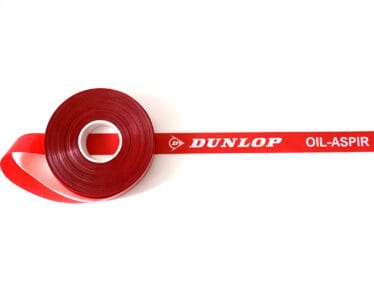
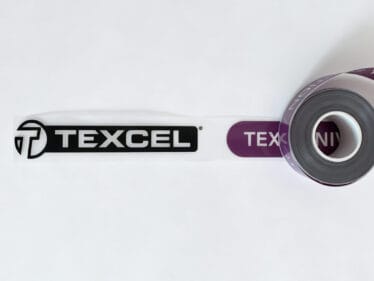
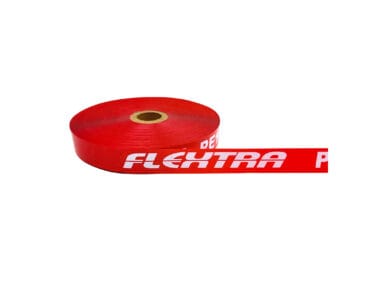
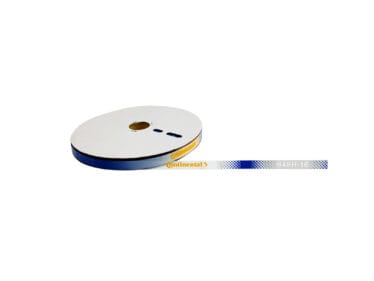
Vulcanizable branding tape is the tool that helps hose manufacturers build brand identity on every meter. It permanently transfers brand markings onto the hose outer surface during vulcanization, making the logo and specifications an integral part of the hose.
This article explores how hose layline branding creates business value, how to achieve brand colors on rubber surfaces, how to optimize logos for hose laylines, and how to manage multiple brands on the same production line.
Why Hose Layline Branding Matters
Many hose manufacturers treat the layline as merely a “standard requirement” or “industry convention.” In reality, a clear and professional layline creates value on at least four levels:
1. OEM customer recognition and trust
More and more OEM equipment manufacturers evaluate hydraulic hose suppliers partly on whether their layline branding is clear, professional, and durable.
A layline with blurred text, uneven color, or peeling marks may raise doubts about the supplier’s production quality — even if the hose itself meets all performance requirements.
Hydraulic hoses conforming to standards such as SAE J517 or EN 853 typically display brand name, standard codes, size, and pressure on the layline. The quality of the marking itself reflects the quality of the product.
2. Channel management and anti-counterfeiting
When hose products are sold through multi-tier distribution networks, the layline branding is the most direct evidence of product origin and authenticity.
Clear, hard-to-replicate layline markings help reduce cross-selling and counterfeiting in the distribution channel. If markings can be easily wiped off or covered (as with some ink-jet printing), the anti-counterfeiting benefit is significantly reduced.
Vulcanizable branding tape produces markings that are integrated with the outer rubber — they cannot be simply erased or replaced, providing inherent tamper resistance.
3. End-user trust and repeat purchases
When end users or service technicians replace a hydraulic hose, the layline branding is their most direct reference. If the previous hose had a clear brand identity and performed well, the user is more likely to specify the same brand next time.
If the marking has already faded or peeled off, the user may not even remember the brand name — and the repeat purchase opportunity is lost.
4. Market differentiation
In competitive hose markets, product specifications and performance may be similar across suppliers. But brand perception can create significant differentiation.
A hose with a clear multi-color logo, professional typography, and durable markings makes a very different impression than one with faded, single-color, easily worn text.
How to Achieve Brand Colors on Rubber Hoses
Hose outer covers are typically black (though gray, blue, red, and other colors exist). Brand markings need to be clearly visible against this background.
Vulcanizable branding tape offers multiple color options:
- White — highest contrast, works on most black outer rubber
- Yellow — common for industrial hoses and specific brand systems
- Red, blue, green — brand differentiation or product grading
- Multi-color combinations — two or more colors on a single tape for richer brand display
Challenges with brand color on hoses
- The same color looks different on different outer rubber base colors
- Screen colors may not match actual post-vulcanization results
- Vulcanization temperature and time may affect color vibrancy
- Fabric-textured and smooth surfaces produce different color appearances
What to do
- Provide your brand’s Pantone reference or official color specification
- Confirm color using actual vulcanized hose samples — not screens or paper proofs
- For different outer rubber base colors, confirm each separately
Logo Design Optimization for Hose Laylines
Many brand logos look excellent on business cards, websites, and packaging — but may encounter problems when applied directly to a hose layline via vulcanizable branding tape. This is because a rubber hose surface is a fundamentally different medium from paper or a screen.
Key design adjustments for hose laylines
1. Simplify details
Very thin lines, complex gradients, and tiny decorative elements may not transfer completely onto the hose surface — especially on fabric-textured or rough outer rubber. Prepare a simplified layline-specific version of your logo.
2. Increase stroke weight
Letter and graphic stroke widths should be increased to ensure legibility after vulcanization. Layline logo strokes are typically 1.5 to 2 times thicker than standard print versions.
3. Ensure adequate character height
Characters that are too small will be difficult to read. Set a minimum character height appropriate for the tape width and hose diameter.
4. Allow sufficient spacing
Logos, text, and numbers need adequate spacing between them. Overcrowded layouts reduce readability, especially during quick visual scanning.
5. Use vector files
Always provide logos in AI, EPS, or PDF vector format. Bitmap formats (JPEG, PNG) may produce blurry edges after transfer.
Recommended layline information sequence

Logo design optimization for vulcanizable branding tape
Brand logo → Product series → Standard code → Size → Working pressure → Batch code
This sequence ensures the most important brand information is visible first, while also meeting standard and traceability requirements.
OEM vs. Private Label: Multi-Brand Management
Many hose manufacturers simultaneously handle:
- Products sold under their own brand
- Products manufactured for OEM customers (private label)
- Different brands or markings for different regional markets
This means the same production line may need to frequently switch between different brand logos, color schemes, and layline content.
Why vulcanizable branding tape works well for multi-brand management
Low changeover cost
Compared to embossing (mold change) or screen printing (screen change), switching vulcanizable branding tape only requires loading a different tape roll — simple operation, minimal line downtime.
Clear version control
Each tape roll corresponds to a specific brand/artwork version, reducing the risk of mix-ups.
Brand consistency
The same tape version ensures consistent brand markings across different production batches — logo position, color, font, and spacing remain identical regardless of operator.
OEM brand confidentiality
Tape suppliers can typically sign non-disclosure agreements to protect OEM customer brand information.
What to do
- Establish separate tape codes and version management for each brand/OEM customer
- Store tapes by brand in separate areas in the warehouse and on the production floor
- Perform first-piece confirmation after every brand change
- Ensure you hold trademark usage authorization from OEM customers
Vulcanizable Branding Tape vs. Other Branding Methods
| Dimension | Vulcanizable Branding Tape | Ink Jet Printing | Adhesive Labels |
|---|---|---|---|
| Bond with hose | Integrated | Surface adhesion | Surface adhesion |
| Durability | Equal to outer rubber | May fade or wear | Prone to peeling |
| Color options | Multiple colors | Usually single color | Multiple colors |
| Brand visual impact | High | Average | Good but has edges |
| Tamper resistance | High | Low | Low |
| Changeover cost | Low | Low | Medium |
| Continuous layline | Yes | Yes | No |
For hose manufacturers who prioritize brand image, marking durability, and multi-brand management, vulcanizable branding tape typically delivers the best overall result.
Branding Compliance Reminders
Layline branding is not only a visual design matter — it also involves compliance:
- Trademark authorization — OEM customer logos and trademarks require written permission before printing
- Standard codes — SAE, EN, ISO, and other standard references must match the hose’s actual technical documentation
- Certification marks — MSHA, DNV, and similar marks require formal authorization
- Pressure values — stated working pressure must match the actual design and test values for each hose size
The tape supplier produces according to the approved artwork. The accuracy of technical content is the hose manufacturer’s responsibility.
Summary
Every meter of hose layline is a brand impression. Throughout the hose lifecycle, the layline marking is the only continuously visible brand touchpoint.
Vulcanizable branding tape helps hose manufacturers permanently transfer brand logos, product information, and standard codes onto the hose outer surface — producing markings that are integrated with the rubber, durable, visually appealing, tamper-resistant, and easy to manage across multiple brands.
FLLabels specializes in customized vulcanizable branding tape solutions for rubber hose manufacturers worldwide. Whether you need your own brand or OEM private labels, single-color or multi-color, we provide matched solutions based on your brand specifications and production conditions.
Want to elevate your hose brand image? Contact us with your brand logo and hose samples for free sampling and a customized branding solution.
FAQ
Why is hose layline branding important?
The layline is the only brand touchpoint that remains visible throughout the hose’s entire lifecycle. Clear, professional branding supports OEM customer recognition, channel anti-counterfeiting, end-user trust and repeat purchases, and market differentiation.
Can vulcanizable branding tape produce multi-color brand logos?
Yes. Vulcanizable branding tape supports white, yellow, red, blue, green, gold, silver, and multi-color combinations on a single tape. Always confirm the final color result using actual vulcanized hose samples rather than screen displays.
How do you manage multiple brands on the same production line?
Establish separate tape codes and version management for each brand. Store tapes by brand, perform first-piece confirmation after every brand switch. Vulcanizable branding tape changeover only requires loading a different tape roll — simple operation with minimal downtime.
What logo design adjustments are needed for hose layline branding?
Prepare a simplified layline version of your logo: increase stroke weight, reduce fine details, ensure adequate character height and spacing. Always provide vector format files and confirm the transfer result on actual hose samples rather than paper proofs or screen displays.