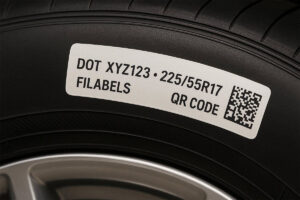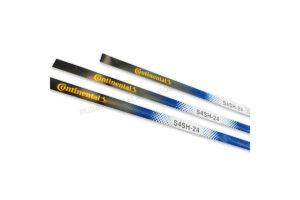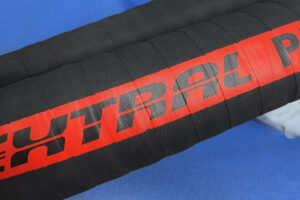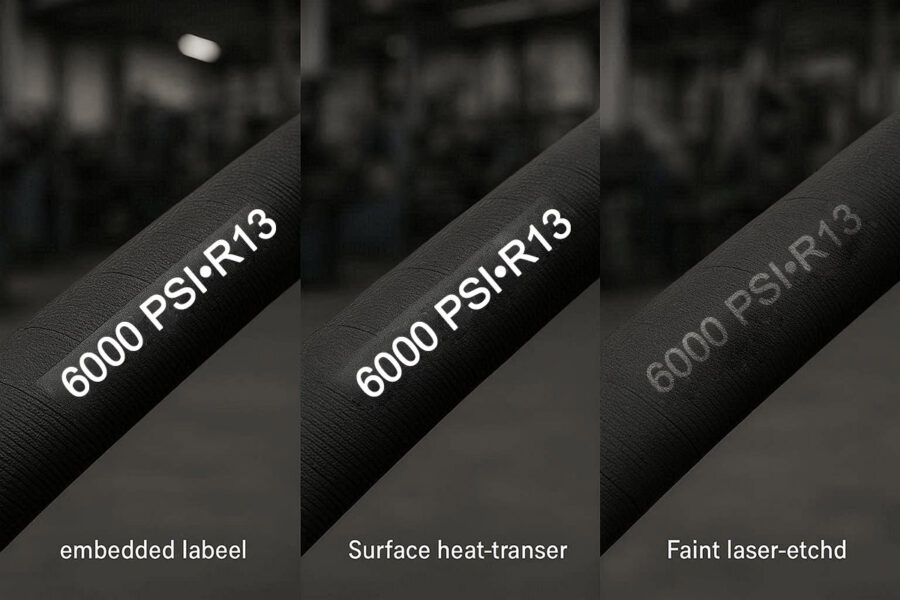
If you’re deciding between vulcanizable labels, heat transfer labels, and laser marking for your rubber hoses, tires, or gloves, this guide compares durability, cost, graphics capability, and ROI—so you can choose the best method for your production process.
Choosing the wrong labeling technology leads to unreadable IDs, field failures, and wasted investment. Yet many manufacturers base decisions on upfront cost alone—ignoring total cost of ownership and long-term reliability.
In this comprehensive comparison, we break down:
- How each method works technically
- Real-world durability in oil, heat, and abrasion
- Equipment, labor, and material costs
- Which method fits your product type (hose, tire, glove)
- Recommendations from 20+ years of industry experience
Overview: The Three Main Rubber Labeling Methods
While all three aim to mark rubber products, their mechanisms and outcomes differ dramatically:
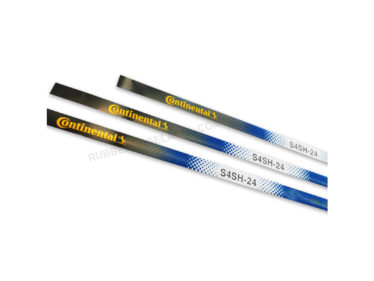
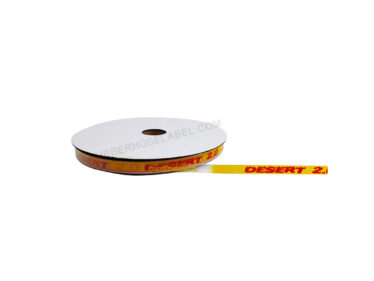
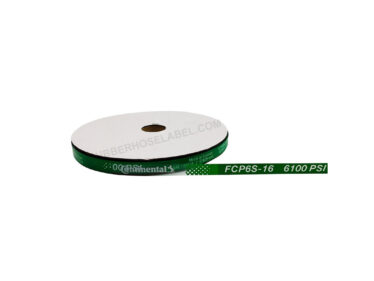
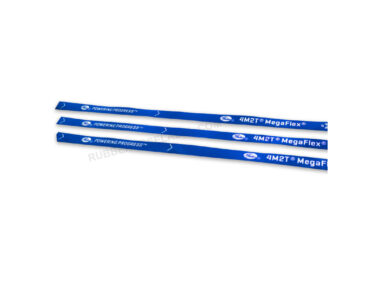
- Vulcanizable labels: Embedded during curing—permanent, monolithic bond
- Heat transfer labels: Surface-applied via heat press—strong adhesion, no curing needed
- Laser marking: Engraves or foams the rubber surface—no consumables, but limited graphics
Detailed Comparison: Performance & Capabilities
| Criteria | Vulcanizable Labels | Heat Transfer Labels | Laser Marking |
|---|---|---|---|
| Permanence | ★★★★★ (Embedded in rubber) | ★★★★☆ (Surface bond) | ★★★☆☆ (Surface engraving) |
| Graphics Quality | Full color, logos, QR codes, multi-language | Limited color (usually 1–2 colors) | Monochrome only (no logos or barcodes) |
| Setup Cost | Low (no equipment) | Medium ($2k–$10k heat press) | High ($50k–$150k laser system) |
| Per-Unit Cost | material cost | lower material cost | no consumables |
| Best For | Hoses, tires, gloves made via curing | Finished products (post-production) | Simple text on dark rubber |
| Maintenance | None | Heat press maintenance | Regular laser calibration & lens cleaning |
When to Choose Vulcanizable Labels
Ideal if you manufacture rubber products through a curing process (e.g., hydraulic hoses, OTR tires, dipped gloves).
Advantages:
- Label becomes part of the product—zero risk of delamination
- Supports full-color branding and traceability (QR codes, batch numbers)
- No post-production steps—integrate into existing line
Used by: Parker, Gates, major tire OEMs, electrician’s insulating glove exporters.
When to Choose Heat Transfer Labels
Best for finished rubber products that can’t undergo curing (e.g., pre-made PVC hoses, nitrile exam gloves, retread tires).
Advantages:
- No mold or curing changes needed
- Strong adhesion with proper heat/pressure
- Lower upfront investment than laser
Limitation: Not suitable for high-abrasion or high-temperature immersion applications.
When Laser Marking Might Work
Laser is viable only in narrow scenarios:
- Dark rubber products (light rubber won’t contrast)
- Simple text only (e.g., “MAX 300 PSI”)
- High-volume production to justify equipment cost
Major drawbacks:
- Cannot print logos, barcodes, or light colors
- Laser can weaken rubber surface over time
- High maintenance and operator training required
Total Cost of Ownership (TCO) Analysis
While laser has “no consumables,” its TCO is often higher:
- Vulcanizable: $0.02–$0.05/label + no equipment
- Heat Transfer: $0.01–$0.03/label + $5k heat press
- Laser: $0 consumables + $100k equipment + $10k/year maintenance
For most mid-volume OEMs, vulcanizable or transfer offers better ROI.
Frequently Asked Questions (FAQ)
Can I use vulcanizable labels if I don’t control the curing process?
If you’re a brand owner sourcing from a molder, work with them to integrate the label. Most molders accept pre-cut labels with no process change.
Real Recommendation from FLLabels Engineers
After 20+ years and 500+ projects, our rule of thumb:
- ✅ Use vulcanizable labels if your product goes through curing
- ✅ Use heat transfer for post-production marking of finished goods
- ❌ Avoid laser unless you only need simple text on dark rubber at very high volume
Get a Free Technology Recommendation
Not sure which method fits your product? Send us your rubber type, production process, and labeling needs—we’ll analyze and recommend the optimal solution.