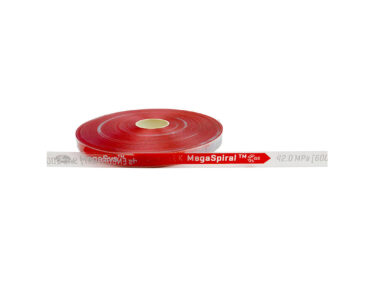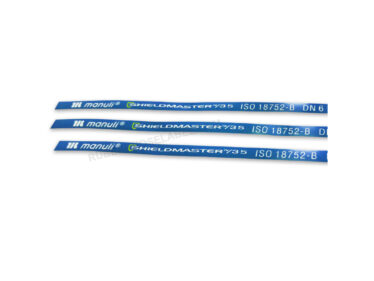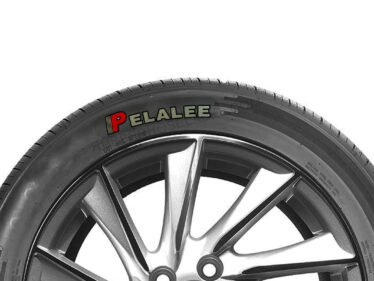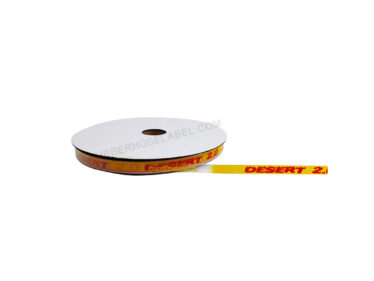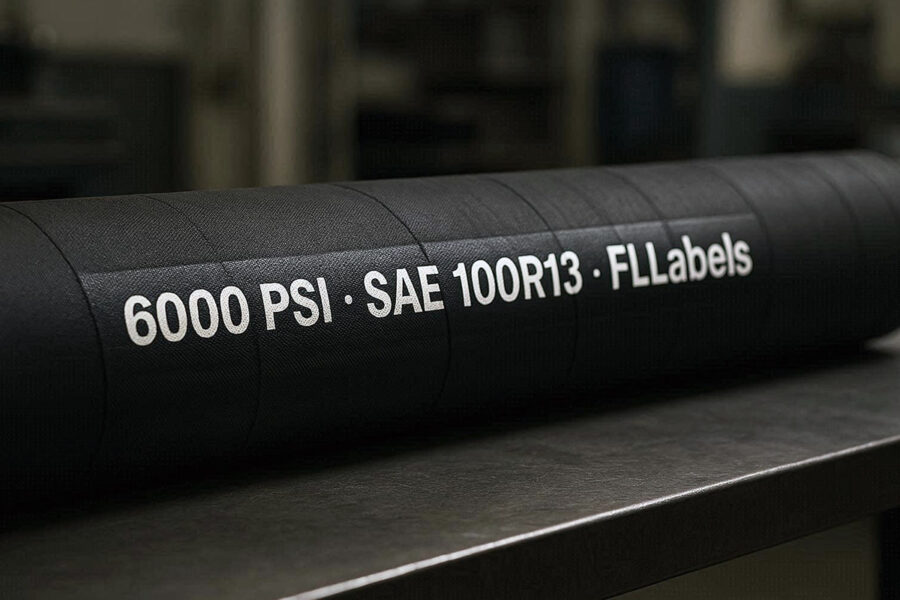
If you’re sourcing vulcanizable rubber labels for hoses, tires, or gloves, this guide explains how they work, why they outperform alternatives, and how to get started with free samples.
If you manufacture rubber hoses, tires, gloves, or other molded rubber products, you’ve likely faced the challenge of permanent identification that survives curing, heat, oil, and abrasion. Standard stickers peel. Ink fades. Laser marks lack detail.
Enter vulcanizable rubber labels – the industry-standard solution for global OEMs like Parker, Gates, and leading tire/glove manufacturers. In this guide, you’ll learn:
- How vulcanizable labels work at a molecular level
- Why they outperform laser marking
- Which rubber products they’re best suited for
- Real-world ROI from industrial clients
- How to get started with free samples
What Exactly Is a Vulcanizable Rubber Label?
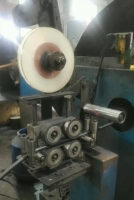
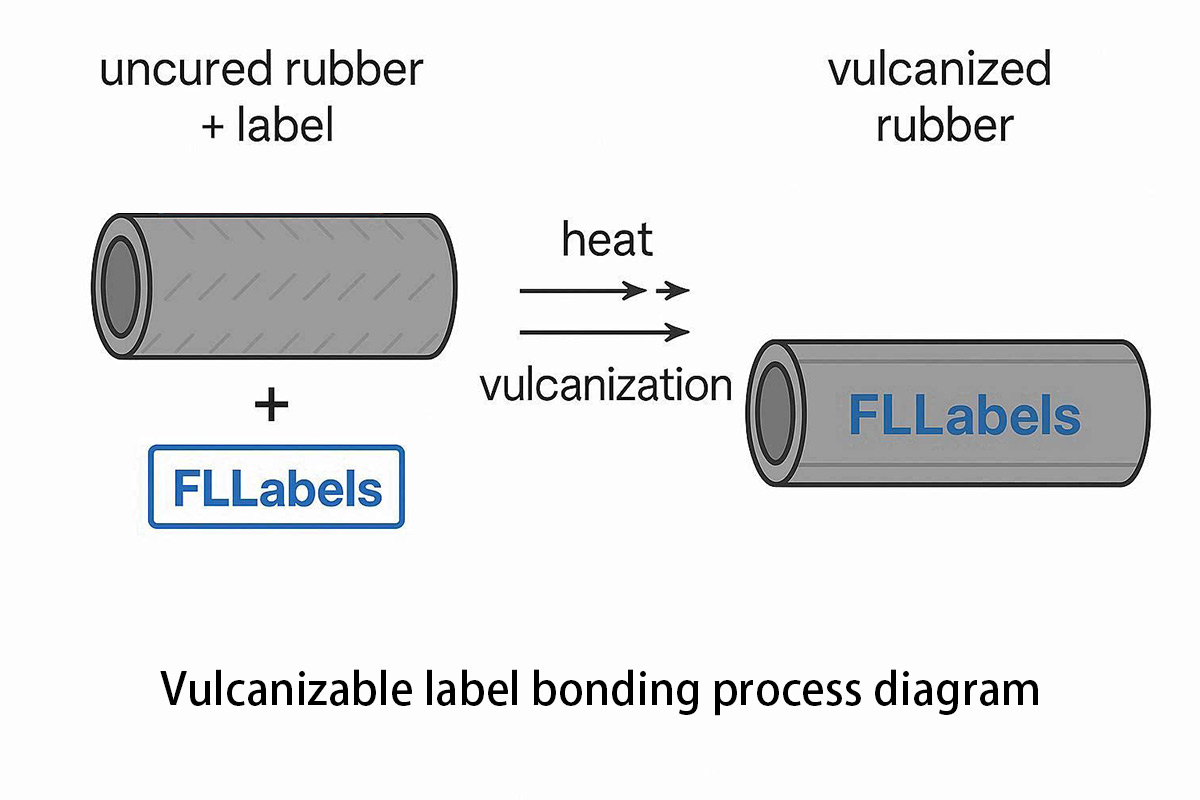
A vulcanizable rubber label is created before the curing process of the rubber hose, where the label pattern is printed using transfer ink on a release film. The release film is directly applied to the surface of the hose, and during the curing process, the ink transfers from the release film to the outer rubber layer of the hose. After curing, the release film can be peeled off, creating a permnent and highly durable label.
During the vulcanization (curing) process—typically 45–90 minutes at 100–155°C—the label’s backing chemically cross-links with the host rubber. The result? A seamless, monolithic bond where the label becomes part of the product itself, not just a surface attachment.
Key Advantages Over Other Labeling Methods
1. Permanent, Indestructible Bond
Unlike surface-applied labels, vulcanizable labels cannot peel, crack, or delaminate—even after 10+ years in harsh environments like oil rigs, chemical plants, or automotive engines.
2. High-Resolution Graphics & Data
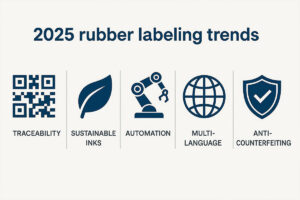
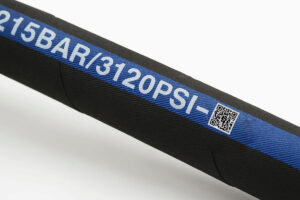
Print full-color logos, barcodes, QR codes, multi-language text, and safety symbols with 0.1mm precision. Ideal for traceability and brand consistency.
3. No Post-Production Steps
Apply the label before curing—no extra labor, no heat presses, no laser machines. It integrates seamlessly into your existing production line.
Technical Specifications (Typical)
| Property | Specification |
|---|---|
| Compatible Rubber Types | EPDM, NBR, SBR, CR, Natural Rubber |
| Curing Temperature Range | 100°C – 155°C |
| Curing Time | 45–90 minutes (standard) |
| Ink Type | Heavy-metal-free, UV-resistant, oil-proof |
| Operating Temp (Post-Cure) | -40°C to +150°C continuous |
| Adhesion | Monolithic (passes ASTM D429 Method B) |
| Certifications | ISO 9001:2015 (Quality) | ISO 14001:2015 (Environmental) |
Where Are Vulcanizable Labels Used?
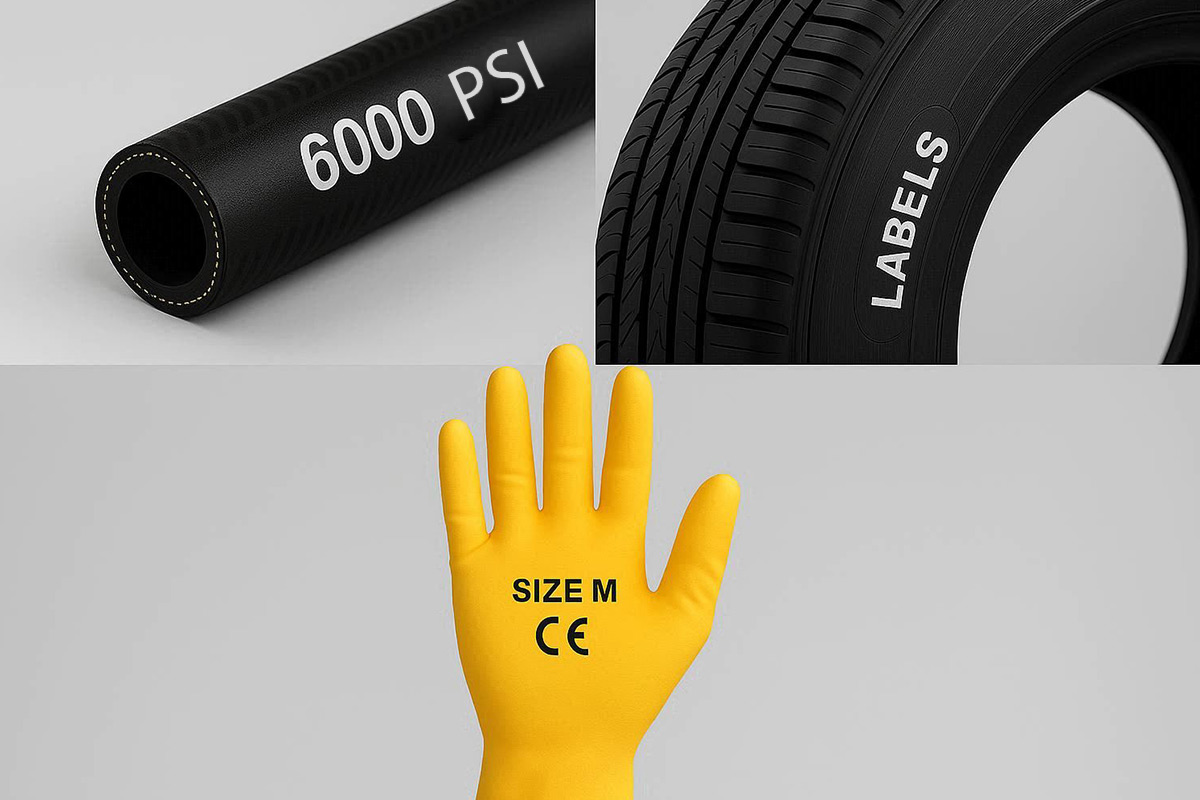
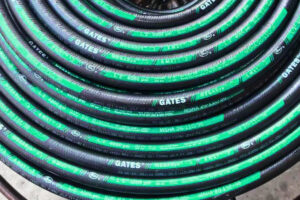
1. Hydraulic & Industrial Hoses
Permanent marking of pressure rating, hose type (e.g., R13), manufacturer logo, and batch code. Critical for safety and maintenance.
2. Tires (OEM & Retread)
Embedded sidewall labels with DOT code, size, load index, and QR for traceability. Survives road abrasion and weathering.
3. Rubber Gloves
For dipped rubber gloves (latex/nitrile), labels show size, material, certifications (CE, FDA), and expiry—without washing off.
4. Seals, Gaskets & Other Molded Parts
Part numbers, material specs, and installation instructions molded directly into the product.
Real Client Impact: Case from an Automotive OEM
A rubber hose supplier switched from laser marking labels to our vulcanizable solution for engine coolant hoses. Results after 12 months:
- ✅ 23% reduction in field misconnections
- ✅ Zero warranty claims related to unreadable labels
- ✅ Improved brand perception with crisp, permanent logos
“The labels survived 1,000+ hours of under-hood testing,” said their quality manager.
Frequently Asked Questions (FAQ)
Can vulcanizable labels be used on silicone or fluororubber (FKM)?
Standard formulations are optimized for EPDM, NBR, and SBR. For silicone or FKM, we offer custom-compounded labels—contact us for compatibility testing.
Do I need to modify my mold or curing process?
No. Simply place the label on the uncured rubber before molding. No equipment changes required.
What’s the minimum order quantity (MOQ)?
We support low MOQs for custom designs—starting at 1,00 meters. Free samples available for evaluation.
How long does it take to get samples?
Standard samples: 5–7 business days. Custom-printed samples: 7–10 days.
Why FLLabels? Trusted by Global Brands
With 20+ years of specialization in rubber labeling, FLLabels offers:
- 6 automated production lines in China
- Imported inks and substrates for superior durability
- ISO 9001:2015 (Quality) | ISO 14001:2015 (Environmental) certified
- Global shipping to 50+ countries
- Free technical support and sample testing
Get Started Today – Risk Free
Don’t guess—test. Request free vulcanizable label samples and see the difference in your own curing process.
Includes: 3 label types + technical datasheet + application guide PDF.