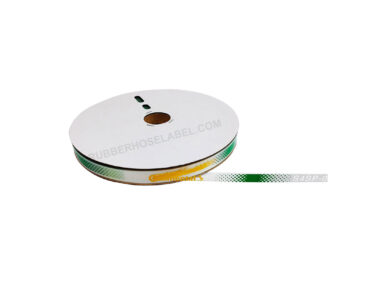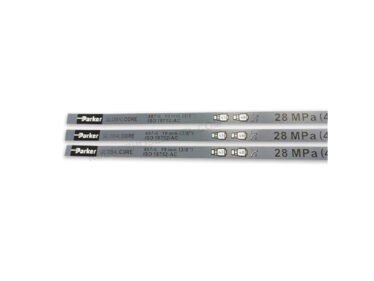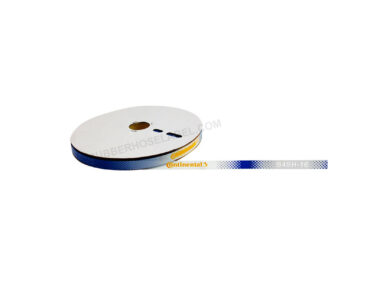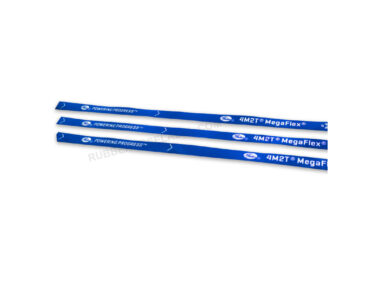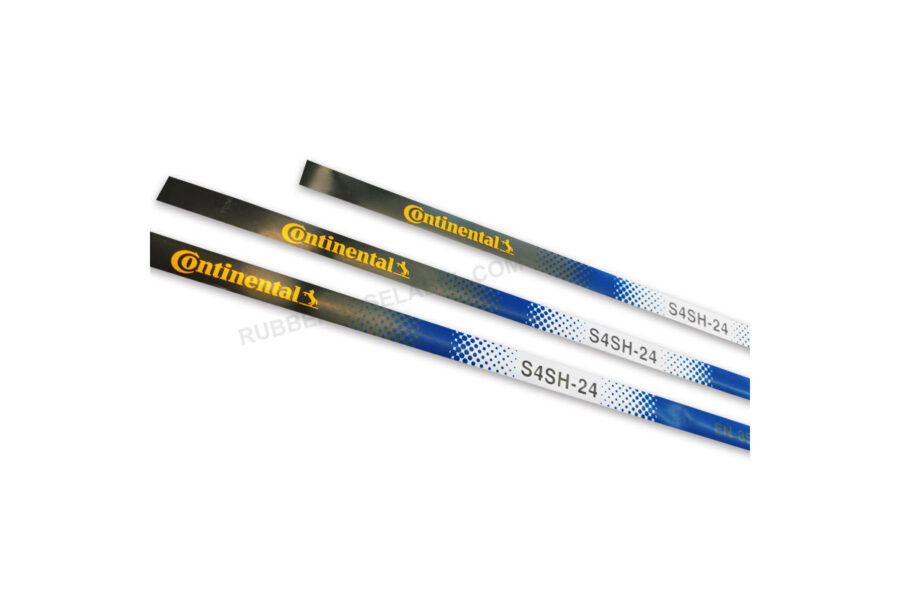
In rubber manufacturing, standard labels fail. The extreme heat (up to 180°C / 355°F) and pressure of the vulcanization process destroy adhesives and melt ordinary plastics.
If you are a hose manufacturer, you need a specialized solution: Labels that withstand the rubber vulcanization process.
Why Standard Labels Fail During Curing
Most industrial labels are applied after the product is made. If applied before curing, they face two major problems:
- Adhesive Failure: The heat breaks down the glue, causing the label to shift or fall off inside the mold.
- Material Degradation: Standard polyester or vinyl labels cannot stretch with the rubber as it expands, leading to cracking and distortion.
The Solution: Vulcanizable Transfer Labels
The only labels engineered to survive this harsh environment are Vulcanizable Transfer Labels (also known as Curing Tapes or Transfer Films).
Instead of sitting on top of the rubber, these labels represent a chemical innovation. They are printed with rubber-compatible inks on a removable carrier film.
Key Characteristics:
- Heat Resistance: Withstands temperatures exceeding 200°C without fading.
- Chemical Bonding: The ink cross-links with the rubber substrate, becoming part of the product.
- High Elasticity: The label stretches up to 300% without breaking, perfect for flexible hoses.
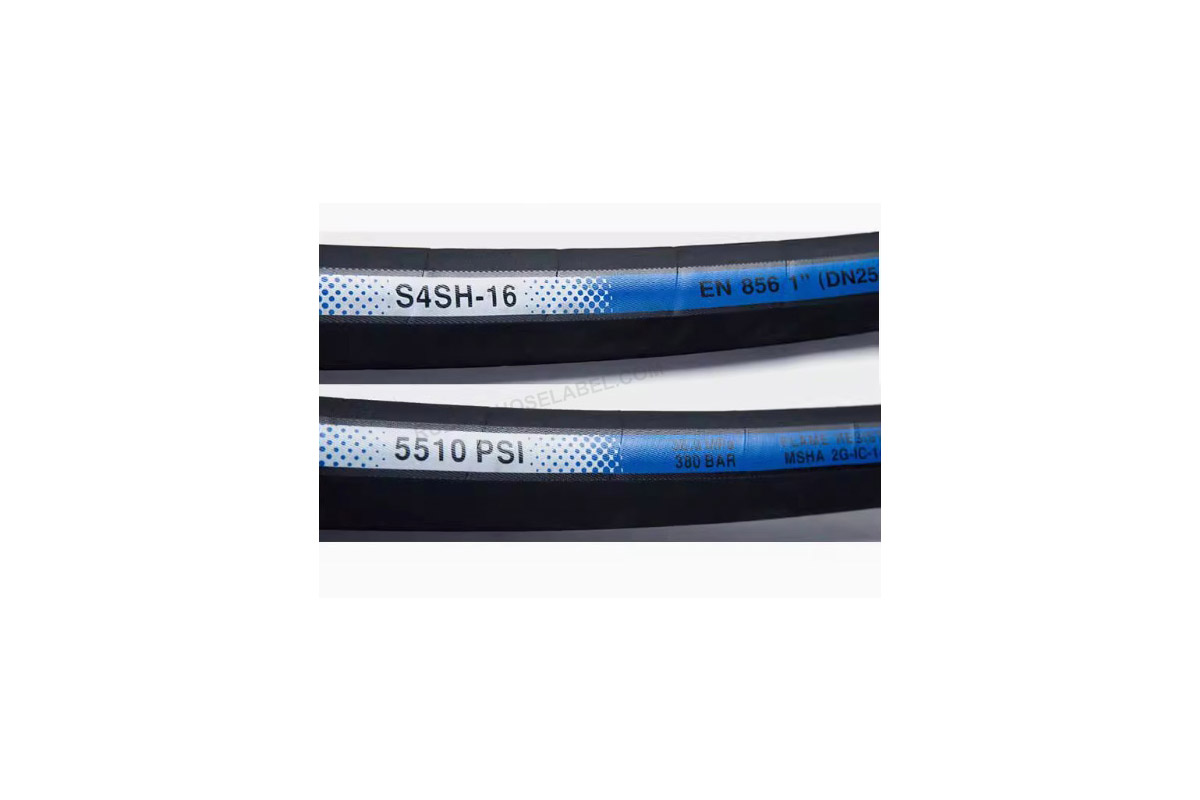
Applications
These labels are standard for:
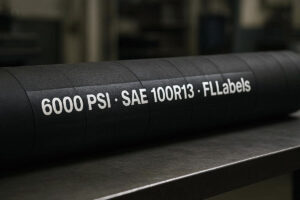
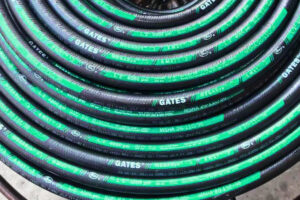
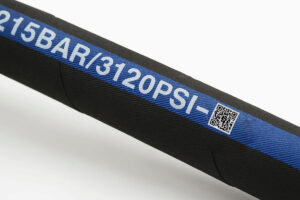
- Hydraulic Hoses (Braided & Spiral)
- V-Belts & Timing Belts
- Rubber Tires (Barcode tracking)
- Molded Rubber Parts
Need Samples for Testing?
Don’t risk your production run with inferior labels. Request free samples of our high-temp vulcanization labels today.