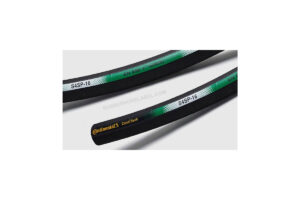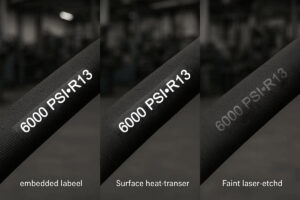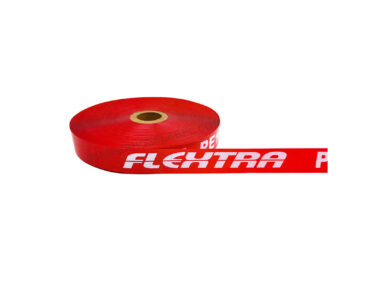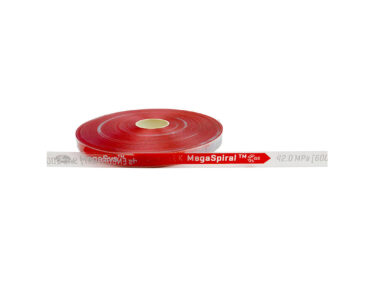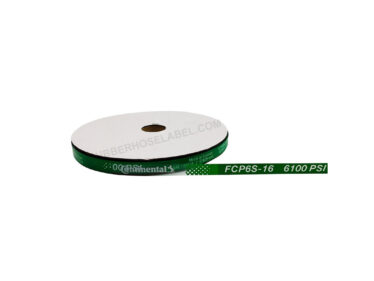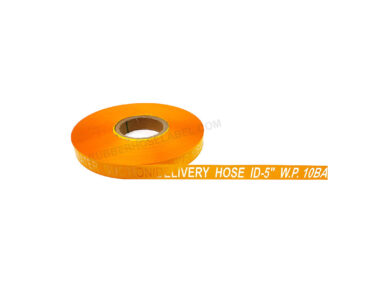
Branding rubber hoses after production is merely a stopgap measure. Stickers peel off, and ink fades over time. The gold standard for durability is branding during the vulcanization process.
Often referred to as the “Transfer Method” or “Vulcanization Transfer,” this technique imprints logos, specifications, and barcodes directly into the hose wall. Here is exactly how it works.
The 4-Step Manufacturing Process
Step 1: Positioning on Uncured Rubber
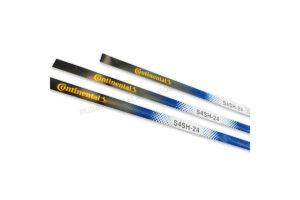
The process begins with the green (uncured) rubber hose. The transfer film (printed on a PP or PET substrate) is precisely positioned onto the specific area of the hose where the marking is required. The natural tackiness of the uncured rubber helps hold the film in place initially.
Step 2: Fixing with Nylon Cure Tape
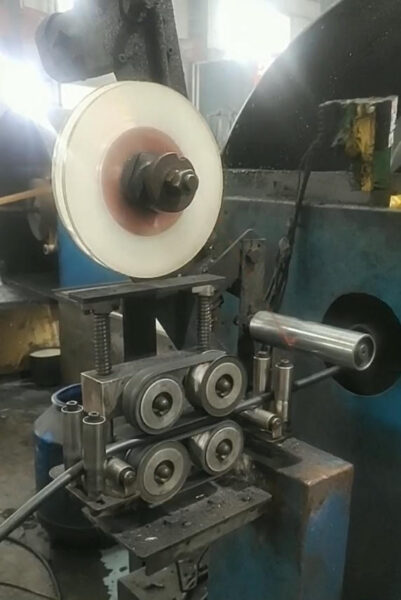
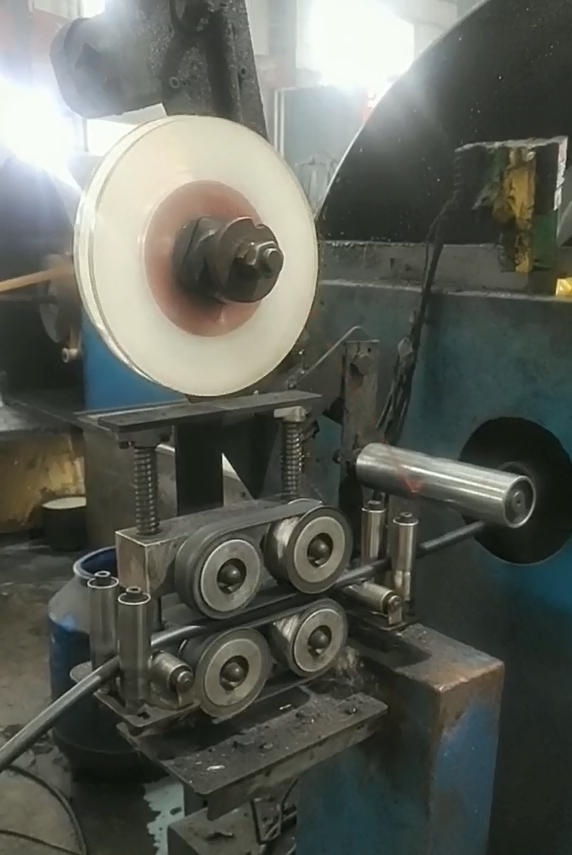
This step is critical. Once the transfer film is placed on the rubber hose, it must be tightly secured using Nylon Cure Tape (尼龙水布).
While this can be done manually, it is generally performed by automated machinery. Manual wrapping often results in uneven tension, which can lead to poor transfer quality or distorted logos. Machine wrapping ensures consistent pressure across the entire label.
Step 3: High-Temperature Vulcanization
The wrapped rubber hose is placed into an autoclave. The high temperature activates the vulcanization reaction. Simultaneously, the nylon tape shrinks due to the heat, generating immense pressure.
Under these conditions, the ink on the transfer film liquefies slightly and undergoes a chemical reaction with the rubber molecules of the hose, effectively transferring the marking from the film into the rubber body.
Step 4: Finishing and Peeling
After curing and cooling, the nylon tape is unwound. Finally, the transparent carrier film is peeled off from the labeled area.
The result is a permanent brand marking that is clean, clear, and smooth to the touch. It sits flush with the hose surface, becoming an integral part of the product.

Why Choose Curing-Stage Branding?
- Durability: The lifespan of the marking is equal to the lifespan of the hose itself.
- Anti-Counterfeiting: Without damaging the hose, it is almost impossible to tamper with or remove the marking, ensuring complete brand integrity.
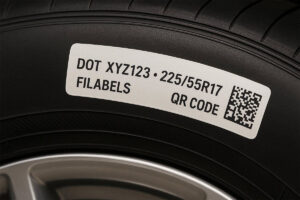
- Inventory Management: It supports the use of permanent barcodes and QR codes for digital tracking.
Upgrade Your Hose Production
We supply high-precision Transfer Films compatible with automated nylon wrapping lines. Contact us today for technical support and samples.